2016: What a year for fintech
By Bretoff Towler of Sense PR2016. The year of the underdog. Twelve months of astonishment embellished by the shock victory for Great Britain to flee the European Union and the disbelieving rise of Donald Trump trusted with the leadership of America – the world's greatest superpower
Section: Features
These shock outcomes and initial uncertainty have affected segments of the global population ranging from families to community, organisations to high-scale businesses.
However, the enthusiasm for fintech investment by financial service companies looks set to continue over the next three years despite concerns about Brexit outlined in a survey compiled by international law firm Mayer Brown.
This multi-billion-pound industry has been at the forefront of a monumental change in financial technology as it continues to transform modern-day banking through its digital appeal and the unparallelled value that it can bring to companies.
Fintech churns out more billion-pound-valued start-ups than any other sector in the UK and generates billions of pounds of revenue for the UK’s economy. Its evolving expansion has kept the UK’s financial industry on the cusp of cutting-edge innovation, and has increased access and variability to banking with a multitude of digital financial services, including money transfer and peer-to-peer loans.

Fintech has enjoyed a strong 2016
The UK may still be reeling from the most discordant vote to shake its foundations in a generation, but the knock-on effect has also put London’s status as the fintech capital of the world in jeopardy.
Even though the actual transition of Brexit still remains some time away, being flexible and adaptable is going to be crucial for fintech companies as they await the reality of leaving the EU to be processed.
Such sentiments were echoed by Daumantas Dvilinskas, CEO of the ever expanding TransferGo. In a recent interview, he spoke of his company’s Brexit strategy and the issues they faced since the historic referendum result.
“In the case of TransferGo, the main thing that saved us from crashing during Brexit was the extensive partnership with banks and unique infrastructure, which enabled us to manage the risk and high volatility.
“TransferGo uses a unique settlement model that allows us to facilitate very fast transactions and we can pay out money to recipients as soon as they receive funds from the sender. This helps us to cut costs and reduce the time spent waiting for a transaction to finish.”
It’s anticipated that the impact of the referendum vote will continue to hit hard for a significant period of time as it evokes feelings of ambiguity and security – common elements that businesses and finance providers greatly detest.
The major worry for fintech firms in the UK is maintaining access to the European Union's single market, which allows them to trade and do business across the continent from their British base.
Whatever the fate of the EU negotiations, fintech companies are likely to see a sizeable change to the way in which they operate and interact with other EU member states and this will no doubt stifle potential external investment.
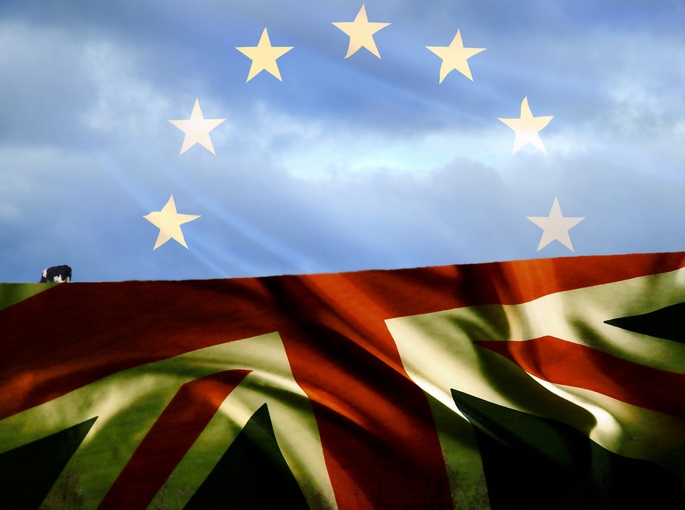
How important is Brexit to fintech firms?
This was emphasised by Tom Blomfield, co-founder and CEO of start-up bank Monzo who affirmed: "Technology investors are pretty happy with technology risk and market risk. They’re not super happy with regulatory risk and political risk.”
Britain’s deep talent pool will also be hindered should limitations be imposed on the free movement of workers into the UK as the logistics behind employing foreign skilled workers become uneconomical and complicated.
This could become a key dynamic if fintech companies opt to look elsewhere in Europe with Frankfurt being touted as the future capital of fintech.
If the raw sorrow of Brexit wasn’t enough, then the triumph of Trump in the presidential race rubbed further salt in the wound and exposed further implications to the future of fintech.
Trump plans to cut back on immigration and, like Brexit, this will inevitably limit the number of skilled immigrant workers that the fintech industry relies on to move forward and improve.

How much of an impact will Donald Trump's election have on fintech?
Despite these potential setbacks, fintech continues to revolutionise this transactional environment and a number of these movements have been popularised during the calendar year.
A surge in crowdfunding has provided the opportunity for businesses to raise their finances quickly by attracting small amounts of investment from a large number of people. As Ali Ramadan, a partner at Bird & Bird, explained: “It’s another example of disruptive technology changing the status quo in equity and financial services when it comes to access to capital.”
Fintech has also provided significant value to companies through the ability to control and analyse large amounts of data, allowing consumer behaviour and spending to be analysed. This productive mechanism has become known as ‘big data’ and it promotes efficiency by allowing start-ups to concentrate on a particular market fragment or a specific service solution.
The future for fintech poses as many questions as it does answers in relation to the direction and possible location where its global hub may relocate.
Frankfurt – the financial capital of continental Europe and a fledgling fintech city is vying for this identity. It’s racing to catch up with London and a count back in March 2016 suggested there were 60 fintech start-ups in Frankfurt, which according to Jochen Biedermann from a Frankfurt fintech development agency were ”not your usual 23-year-old run, back-of-the-envelope start-up, they’re run by managers who are on average 35 to 40 years old and have many years of experience in the traditional finance sector”.
Consequently, the growth in Frankfurt is colossal and Germany as a whole is embracing the movement. Frankfurt may well now be the perfect city for start-ups to join the playing field, but like any newcomer, the desire for poaching talent that would have previously gone into the banking sector is showing no signs of letting up.
“We need young talent,” said Deutsche Börse’s Eric Leupold. “If they think Frankfurt isn’t just the tie-wearers, but there are also young and cool people there, then Bornheim [a district in Frankfurt] is a great place.”
Ultimately, fintech will strive to keep making a difference to the financial landscape no matter where the fintech capital ends up. In the wake of an unstable 2016, its invaluable support to financial services across the world will continue to reshape and innovate finance by cutting costs and expanding access to financial services.
Looking at the bigger picture (and seeking some silver lining), it’s important to note that the UK fintech scene has established its position as a market leader, and may well continue to manage and grow this reputation by accessing non-EU markets before any of the potential impacts discussed above actually materialise in light of Brexit.
It may well be that, freed from some of the more burdensome aspects of pan-European regulation, UK fintech may be enabled by liberalisation and could develop a competitive advantage.
All of this remains to be seen, but what we do know is that UK fintech is good at converting an opportunity when it sees it. We all eagerly await what developments occur in 2017.
Keywords: Fintech, Donald Trump, European Union, Brexit, Fintech firms, City of London, Finance, Technology, Theresa May,
Source: Bridging & Commercial — https://bridgingandcommercial.co.uk/2016-what-a-year-for-fintech